Adult orthodontics satisfaction is higher in men than in women


|
|
The demand for adult orthodontic patients seeking both functional discomfort and aesthetic improvement is steadily increasing. In particular, the proportion of women is so high that about 70% of adult correctional patients are women, and in recent years, the number of middle-aged patients who value quality of life is also increasing. Studies on patient tendencies have been conducted in the field of correction, where the importance of personalized treatment is emphasized, but studies on age differences have been insufficient.
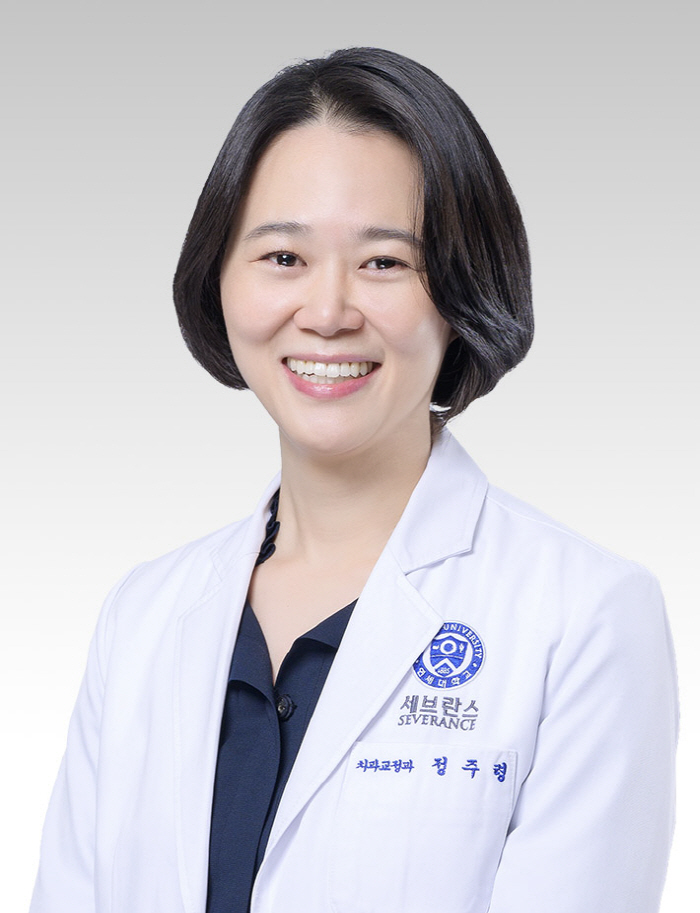
Professor Chung Ju-ryeong Chung's team at Yonsei University's Gangnam Severance Hospital (Hospital Director Cho Sung-wook) conducted three sub-studies: △ eye-tracking △ 3D facial simulation based on deep learning △ treatment satisfaction questionnaire to substantially investigate the difference in treatment satisfaction according to the gender and age of patients.
The research team conducted facial attraction evaluation and eye movement analysis tasks on 33 adults (15 women and 18 men) aged 20 or older. Participants evaluated their attractiveness by observing faces including photos of their faces with six adult models with normal occlusions. Facial photographs consisted of standardized stimuli that minimized the influence of background and external factors by taking non-smiling and smiling expressions from the front (0°), 45°, and 90° sides.
Participants observed the photo for 4.5 seconds and then evaluated 'face attractiveness' on a 4-point scale within 2 seconds. As a result of eye tracking, both men and women had the longest gaze fixation time in smiling front faces and the shortest in expressionless side faces. In particular, women showed significantly longer gaze fixation times on smiling front faces than men (p<0.05).
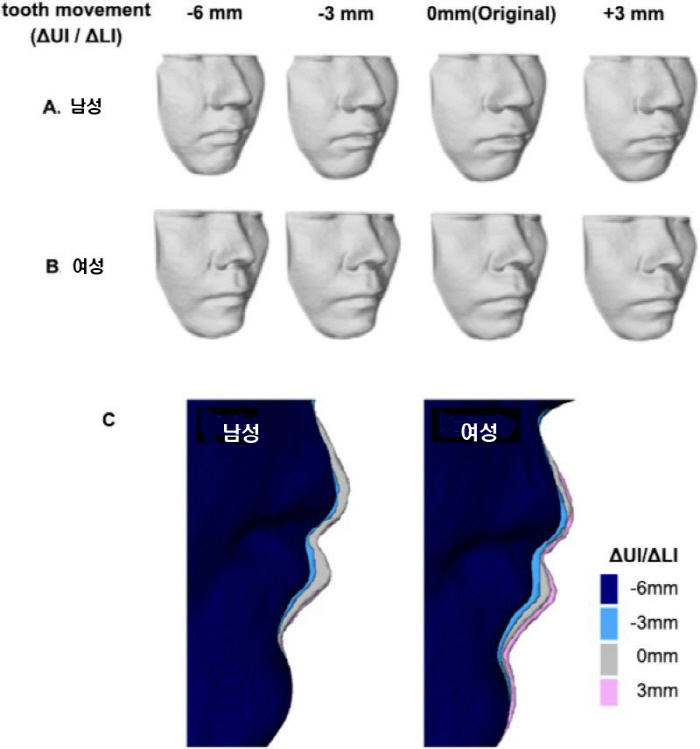
The research team also used AI-based 3D facial simulations to predict soft tissue changes according to tooth movement (±3~6㎜). As a result of the analysis, women showed more extensive and distinct soft tissue changes in proportion to the amount of tooth movement than men (P<0.05). In particular, posterior migration and volume reduction of lip and cheek areas were noticeable in women. This suggests that women's soft tissues are more responsive to orthodontic treatment.
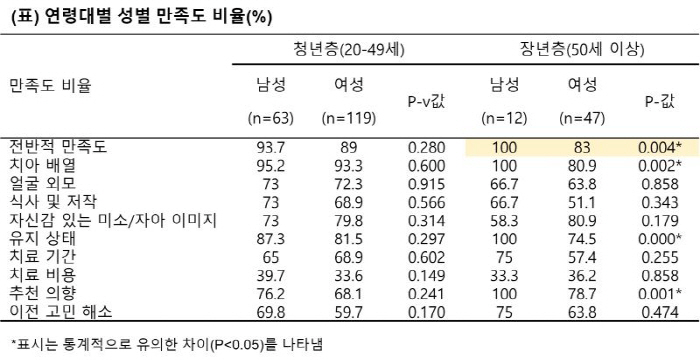
There was also a gender difference in the subjective satisfaction of patients. As a result of a satisfaction survey of 241 adult orthodontics patients (166 women and 75 men), the rate of treatment satisfaction corresponding to 'very satisfaction' and 's satisfaction' was 95.4% for men and 86.5% for women, which was higher for men than for women.
In particular, elderly men over 50 years of age showed significantly higher satisfaction than women in overall satisfaction such as tooth arrangement and maintenance status (P<0.05). Nevertheless, women showed higher satisfaction than men in the 'Smile Confidence' and 'Self-Image Enhancement' categories, showing that positive self-assessment of aesthetic improvement was reflected.
Professor Chung Ju-ryeong explained that "For female patients, it is important to understand the high aesthetic expectations and the sensitive reactivity of soft tissue and to communicate with patients by delicately predicting changes in their faces from the treatment stage." "In particular, the difference in satisfaction among elderly women over 50 years of age will be an important academic basis for preparing corrective clinical guidelines that subdivide age and gender in line with the aging era."
The study was published in Seminars in Orthology, a leading international journal in the field of orthodontics, under the theme of 'The impact of gender on aesthetic perception, treatment outcomes, and satisfaction in adult orthodontics patients'.
|
This article was translated by Naver AI translator.