Flu Positivity Rate 45%...Korea's Vaccination Surges 14.4 Times Even Now
Dec 02, 2025


|
According to Chinese media such as CCTV, the China Centers for Disease Control and Prevention (CDC) recently announced that the flu positive rate among suspected flu patients confirmed by medical institutions nationwide has already reached 45%. As a result, Chinese health officials determined that the flu epidemic has entered the middle stage across China, and that some regions have already reached high levels of the epidemic.
However, experts stress that this figure should not be taken to mean that 「40% of those around you have the flu」.
The flu positivity rate is a test result for patients who visit hospitals with respiratory symptoms such as fever and cough, and in reality, more than half are confirmed to be infected by other viruses or bacteria. Examples include rhinovirus, respiratory syncytial virus (RSV), and pneumonic mycoplasma.
In this regard, a specialist in Beijing explained, "The flu positivity rate is the result of tests on patients with suspected flu symptoms.". "This is a typical situation that occurs every winter and spring when respiratory infections occur, and it is characterized by the prevalence of several pathogens centered on the flu."
The flu is already in vogue in our country. The flu epidemic warning was about two months earlier than last year.
According to the Korea Centers for Disease Control and Prevention, the number of flu doctors per 1,000 outpatients who visited 300 clinic-level sample monitoring medical institutions in the 46th week of this year (November 9-15) was 66.3, up 30.8% from the previous week (50.7).
According to the trend of the number of flu doctors in the past four weeks, the number increased from 13.6 in the 43rd week to 22.8 in the 44th week, 50.7 in the 45th week and 66.3 in the 46th week, up 14.4 times from the same period last year (4.6). In particular, it is reported that it is concentrated on school-age children and adolescents, including 170.4 people aged 7 to 12 and 112.6 people aged 13 to 18.
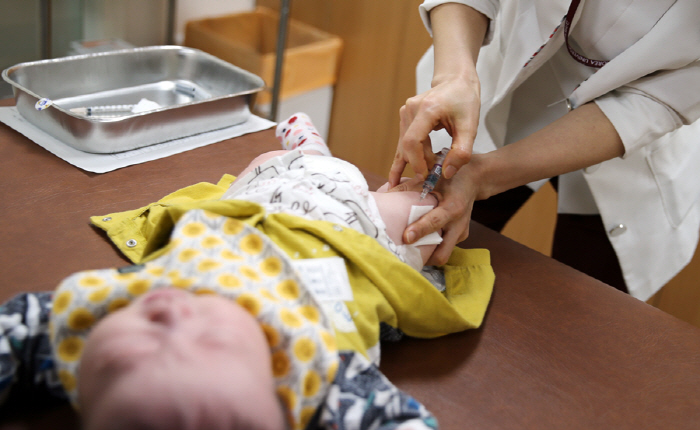
As a result, health authorities are encouraging flu vaccinations.
The flu vaccine takes about two weeks to form antibodies after inoculation. In Korea, the flu shows a pattern of the first wave from December to January of the following year and then the second wave from March to April, so you can expect the effect even if you get inoculated in late November or early December. In addition, the purpose of the flu vaccine is not only to prevent infection itself, but also to reduce serious complications, especially in high-risk groups. It helps to reduce the risk of progressing to severe disease such as pneumonia, hospitalization, etc. during the rest of the epidemic.
Yoon Ji-hyun, a professor of family medicine at Korea University's Anam Hospital, advised, `Just because the epidemic has begun does not mean that the vaccination period has been increased, and if you have not already been vaccinated, you should complete the vaccination by early December.' `Especially for high-risk groups, vaccination as soon as possible may be advantageous for health care.'
Just because you've had the flu once a season doesn't mean you can feel safe.
Flu can be reinfected with other types of A or B viruses, and flu vaccines are designed to prepare for multiple types of viruses at the same time. The flu vaccines used in Korea this year are two types of A (H1N1 and H3N2) and a trivalent vaccine, including type B Victoria. The type B Yamagata family, which was included in the existing tetravalent vaccine, has not been detected worldwide since March 2020, and has been excluded since this year in accordance with World Health Organization (WHO) recommendations. The preventive effect and safety of the trivalent and tetravalent vaccines are equal, and they are optimized for viruses that are currently prevalent.
Professor Yoon emphasized, "The flu vaccine is 70 to 90 percent effective in preventing outbreaks in healthy adults, and 50 to 60 percent effective in preventing hospitalization and 80 percent effective in preventing death, although it is slightly lower in preventing outbreaks in those aged 65 and older at 40 percent. In particular, since the epidemic began earlier than usual this year but lasted until spring, we recommend that high-risk groups who have not yet been vaccinated should be vaccinated without delay."
|

This article was translated by Naver AI translator.