Temperature drop, spine pain...Himchan Hospital recovers quickly and improves with minimally invasive single-hole endoscopic surgery


|

This is because the cold stiffens muscles and ligaments and lowers blood circulation, increasing sensitivity to pain. In particular, worsening back pain may be noticeable in the elderly who suffer from spinal diseases such as lumbar disc or spinal stenosis, who have reduced outdoor activity, and office workers who sit in chairs for a long time. In fact, a paper published in the international journal 『Frontiers in Physiology』 in 2022 (Cold exposure and musculoskeletal conditions) reported that a low-temperature environment can increase the risk of musculoskeletal pain and disease.
Kim Min-kyu, director of neurosurgery at Gangbuk Himchan Hospital, explained, "The age group suffering from low back pain due to the increased use of smartphones, and lack of exercise has become widespread." "The problem is that if pathological low back pain is left unattended, not just low back pain, nerve pressure accumulates and leads to chronic pain."
◇ When the temperature drops, muscle and ligament stiffness and spinal pressure become severe
When the temperature is lowered, our body contracts and stiffens muscles and ligaments to maintain body temperature. This muscle stiffness reduces the flexibility around the spine and further presses the nerve passage, which is already narrowed due to lumbar disc or spinal stenosis. This interferes with blood circulation and slows down the release of pain-causing inflammatory substances and accelerates accumulation.
Low temperatures also increase sensitivity to pain. If you suddenly move or fall without a preparatory motion while your muscles are stiff, it is easy to cause a much larger impact than usual, leading to acute spinal pain. In addition, as external activity or movement decreases, the muscles supporting the waist weaken and the pressure on the disk increases, worsening the existing disease.
◇ Single-hole spinal endoscope, selectively removable
Tissue around the spine is sensitive to cold, so it is important to keep warm and relax muscles through regular stretching. If numbness in the legs, pain while walking, and radiating pain extending to the buttocks and legs appear, it may be a dangerous signal that is intensifying nerve pressure, so professional diagnosis and treatment should be performed.
Treatment of spinal diseases prioritizes conservative treatments such as drugs, injections, and physical therapy. However, surgical treatment should be considered if severe pain persists or if there is back pain or radiating pain that occurs repeatedly. Usually, surgery is recommended if motor or sensory disorders are evident and reflexes are distant.
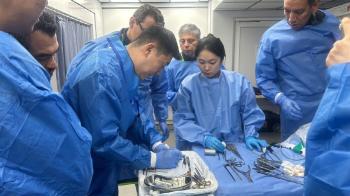
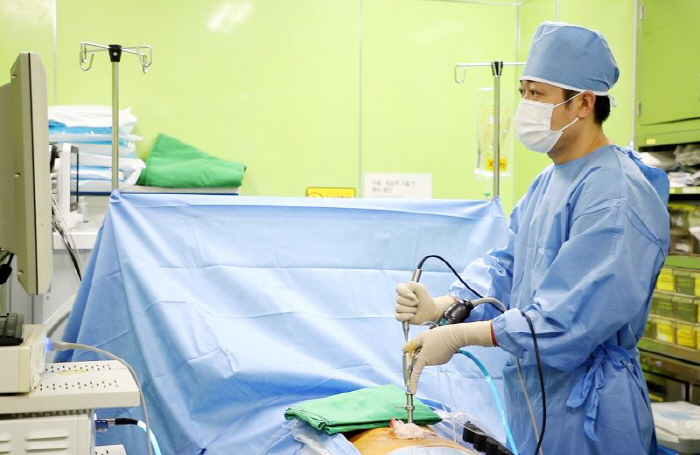
Single-hole spinal endoscopic decompression (PSLD), which significantly reduces the burden on the patient's body by minimizing tissue damage, is a minimally invasive surgical method that can accurately decompress nerves without long incision. It is characterized by surgery with only one small incision with a diameter of 7-10mm. Unlike conventional surgery, which extensively dissected muscles and ligaments around the spine, monoporous spinal endoscopy is advantageous in maintaining spinal stability by minimizing damage to normal tissue. This significantly reduces postoperative pain and results in little scarring.
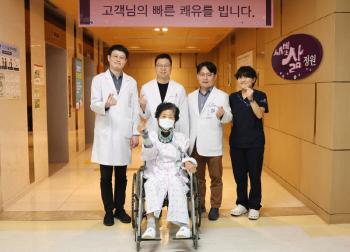
In particular, the recovery speed of patients is emerging as a new standard for spinal treatment, and they can walk the day after surgery and return to their daily lives is fast. In addition, small and precise endoscopic equipment is used during surgery, so there is less bleeding and the possibility of infection is low. Since important structures such as nerves, blood vessels, and disks are identified much more precisely than the naked eye and operated, it lowers the risk of nerve damage and contributes to lowering the recurrence rate by accurately decompressing the lesion. It can be considered as a safe treatment for patients at high risk of bleeding or slow recovery due to high blood pressure, diabetes, and taking anticoagulants.
Kim Min-kyu, director of neurosurgery at Gangbuk Himchan Hospital, said "Single hole vertebral endoscopy is used to remove various causes such as spinal stenosis, intervertebral stenosis, and laminectomy as well as lumbar disc herniation."The advantage is that a small incision can achieve great effects with safe treatment without strain on the spine" he said.
|
This article was translated by Naver AI translator.