The world's first demonstration of the effectiveness of treating jaw joint disorders with a smartphone app
Dec 02, 2025


|
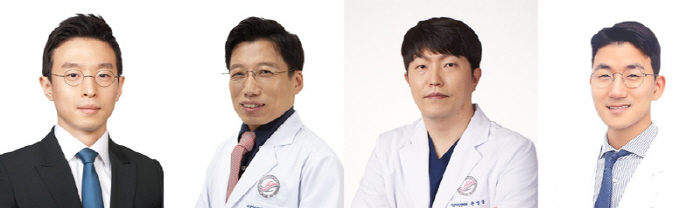
A research team on oral and maxillofacial surgery at Hallym University's dental school (School of Clinical Dentistry) (Co-corresponding author: Professor Cha Jae-hwan and Yang Byung-eun of Hallym University Sacred Heart Hospital, Co-author: Professor Park Sang-yoon of dental clinic at Hallym University Sacred Heart Hospital, and Professor On Sung-woon of dental clinic at Dongtan Sacred Heart Hospital at Hallym University) proved for the first time in the world that digital treatments using smartphone apps significantly improve the pain and function of jaw joint disorders. The study, titled 'Evaluation of the Efficacy of Digital Therapeutic Intervention for Cephalothorax Disorder: Multicenter, Randomized, and Sham-Controlled Trial', was published in the October issue of the SCIE-level international journal Journal of Medical Internet Research (I.F. 6.0).
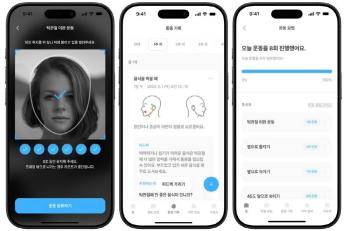
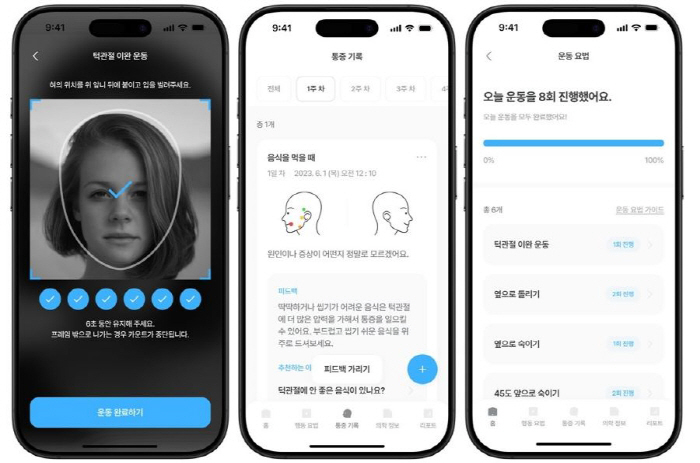
The research team used 'Clickless DTx TMD-01', a digital treatment app that can manage and treat jaw joint disorders based on a smartphone developed by 'Beyond Medicine'. Clickless consists of education on diseases related to jaw joint disorders, jaw joint exercise, behavioral habit tracking, meditation, stress management, and data-based feedback.
From June 2024 to June 2025, 93 patients treated for jaw joint disorders at Hallym University Sacred Heart Hospital and Hallym University Dongtan Sacred Heart Hospital were divided into 44 patients in the digital treatment group and 49 patients in the placebo group to analyze changes in jaw joint pain (VAS), maximum opening (the distance between the incisors when the mouth is opened to the maximum), jaw function restriction scale (JFLS), and oral behavior checklist (OBC) for 6 weeks. The placebo group used an app with the same appearance but the treatment content removed.
As a result of the analysis, the pain index in the digital treatment group decreased 3.4 times compared to the placebo group for 6 weeks. In addition, the maximum opening increased by 1.6 mm on average in the placebo group, while the digital treatment group increased by 6.5 mm on average, improving 4.1 times compared to the placebo group. In addition, the digital treatment group showed an improved effect by 2.5 times the jaw function limit scale and 3.9 times the oral behavior checklist than the placebo group. In particular, the oral behavior checklist is a figure showing abnormal behavior that causes jaw joint disorders, suggesting that digital treatments can effectively improve patients' behavioral risk factors through real-time tracking and feedback.
Professor On Sung-woon said, "In the treatment of temporomandibular joint disorder, changes in patient behavior are important factors, but in the existing treatment method, there was a limit to continuous follow-up except during outpatient treatment hours."In this study, the digital therapy group was able to promote and motivate patients to change their behavior consistently through systematic exercise programs and real-time tracking and feedback included in the app", he explained.
Professor Yang Byung-eun "Clinically demonstrated that digital treatments can comprehensively improve the behavioral and psychological factors of jaw joint disorders."It presents a new treatment paradigm that can provide standardized behavioral therapy even in non-face-to-face environments."," he stressed.
Professor Byun Jae-hwan "This study confirmed that digital therapy can be used as an adjuvant therapy to treat jaw joint disorders."In addition to conventional physical therapy or occlusal device therapy, a digital-based self-therapy platform that patients can manage themselves will be a new treatment option for jaw joint disorders."
Researchers at Hallym University plan to further strengthen the clinical basis for digital treatment in the field of oral and maxillofacial diseases through long-term follow-up research and AI-based customized treatment algorithms in the future.
Meanwhile, this study was conducted with the approval of the clinical trial (KCT0009493) of the Ministry of Food and Drug Safety.
|
This article was translated by Naver AI translator.