What is the mysterious creature found on the beach?Only four observations in 40 years


|
This octopus is known as 'septopus (septopus, seven + octopus))' and has the characteristic of having only seven legs, not just the usual eight legs.
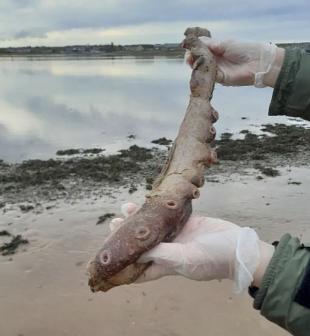
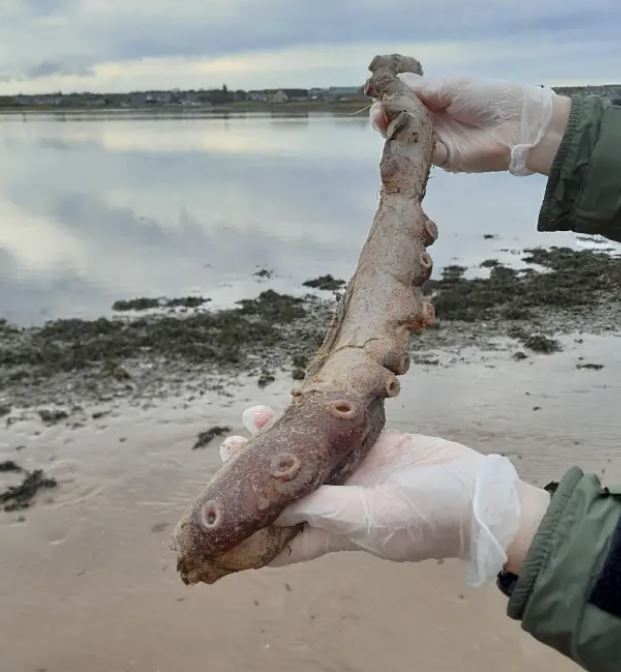
According to local media, including the BBC, a citizen who was taking a walk on the beach of Everdinshire in Coliston, Scotland, found a large octopus' tentacle and informed the management team of the Foby National Nature Reserve.
Visiting the site, the management team said "The diameter and sucker size of the tentacles were generally so large that they could not be compared to the small octopus found in the area."At first, they thought it might be part of a giant squid." he said.
The management team sent the photos to various organizations, including the Department of Zoology at the University of Aberdeen, asking for confirmation, and the creature was eventually found to be 'Ceptus'. Cytus is also called 'blob octopus', and it is one of the largest octopus species in the world, with a maximum length of about 3.3 m. It lives in the deep sea below 500 meters deep, and is so rare that only four living individuals have been observed in the past 40 years. The most recent case was taken last month by a remote-controlled submersible in Monterey Bay, California.
In fact, the name cefotus is somewhat misleading.
In reality, the male has eight legs, but only seven are visible on the outside because he hides the legs used for breeding in the pocket behind his right eye.
A marine biologist said "It's very unusual and surprising that deep-sea creatures have washed up on the coast. It's possible that they've been caught in the net, abandoned, or attacked by whales." Or he could have entered the shallow sea, lost his direction, and been predated.'
The carcasses of the discovered cefotus are currently in cold storage, some of which will be preserved as museum specimens.
This article was translated by Naver AI translator.