5 Essential Prepares for Winter for Arthritis Patients


As the winter temperature drops significantly, the pain and discomfort of arthritis patients have become worse. In particular, symptoms of degenerative arthritis patients are expected to worsen more frequently this year as early cold waves and volatile weather with large fluctuations in temperature are expected.
Director Chung Gu-hwang (Orthopedic Surgeon), head of the joint center at Barunseang Hospital, said "When it gets cold, the tissues around the joint contract and the blood flow decreases, increasing pain sensitivity." If you have joint diseases, winter preparation is essential, not an option. Then, in order to spend the winter healthy, the following are the five essential preparations that arthritis patients must practice in winter.
◇Keep joint warm…Knees and fingers are especially vulnerable to cold
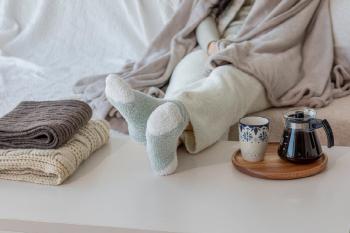
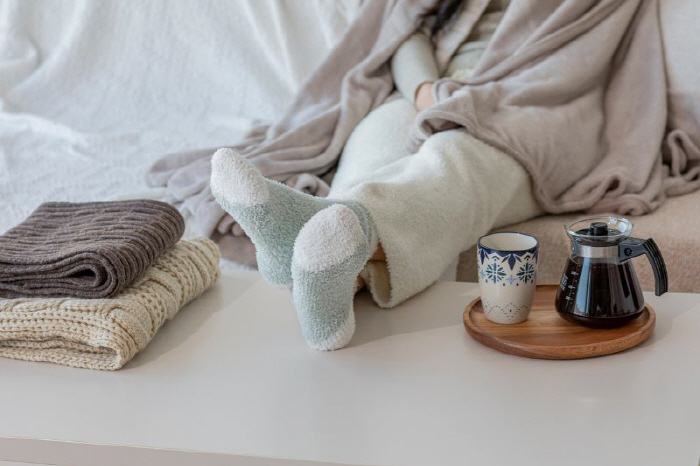
Cold air in winter easily stiffens muscles and ligaments around the joint, worsening pain. When you go out, it is recommended to wear thermal clothing that can protect major joint areas such as knees, waist, and fingers, and to control the environment by using knee blankets or heating devices to prevent direct cold winds from contacting indoors and indoors. Simply keeping the joint warm often reduces the pain by more than half.
◇Keep joint flexibility with steady indoor stretching
In winter, activity decreases and joint flexibility and muscle strength decrease rapidly. If you regularly stretch your back, knees, and hips even for 10 to 15 minutes a day, it will be very helpful in preventing pain. In particular, sitting in the same position for more than 30 to 40 minutes is very good for arthritis patients, so it is important to do light stretching from time to time.
◇Weight Management…2-3kg increase in winter is a big burden on the knee
In the cold winter, it is easy to gain weight due to a natural decrease in activity. The problem is that weight gain leads to the load on the knee joint. In particular, in the case of degenerative arthritis patients, a weight gain of 1 kg increases the actual load on the joint by 3 to 4 kg. It is essential to prevent weight gain in winter through proper indoor exercise and diet management.
Director Chung Gu-hwang said "When it comes to muscle exercise, it is easy to think of high-intensity exercise, but the important thing is to do it steadily, not intensity. If you have knee arthritis or weak muscle strength, simple exercises such as lifting your legs by putting a water bottle or cushion on your ankle, and sitting and standing up with a chair are effective.
◇ Early treatment if pain persists...Winter neglect leads to worsening symptoms
If left unattended as temporary pain, inflammation may worsen due to winter stiffness. Early diagnosis is essential if the pain lasts for more than two weeks or if the pain becomes so severe that it is difficult to climb up and down the stairs. Arthritis can significantly slow the rate of progression to the terminal stage just by combining appropriate treatment and life management in the early stages.
◇Consider personalized treatments such as cartilage regeneration therapy and injection therapy
For patients whose pain becomes particularly severe in winter, customized conservative treatment according to joint conditions is helpful. Depending on the degree of cartilage damage and pain, cartilage injection (hyaluronic acid injection), stem cell-based cartilage regeneration treatment (Cartistem), and PRP are effective in relieving pain and improving function.
However, artificial joint surgery is inevitable if the cartilage loss is widespread and the pain is severe and daily life is difficult with conservative treatment alone. Recently, with the introduction of minimally invasive surgery and robot artificial joint surgery that minimizes incision and improves accuracy, more precise and stable surgery results can be expected.
Since knee degenerative arthritis has different joint conditions and pain intensity for each patient even at the same stage, it is important to select the most appropriate treatment through accurate diagnosis by a specialist rather than considering surgery unconditionally.
Director Chung Gu-hwang said "In winter, the pain may worsen due to reduced activity and cold, but lifestyle management alone can prevent symptoms from worsening sufficiently. Basic management such as warmth, stretching, and weight control is the most effective, and if the pain persists, it is important to get an accurate diagnosis and appropriate treatment early."
Director Chung Gu-hwang (Orthopedic Surgeon), head of the joint center at Barunseang Hospital, said "When it gets cold, the tissues around the joint contract and the blood flow decreases, increasing pain sensitivity." If you have joint diseases, winter preparation is essential, not an option. Then, in order to spend the winter healthy, the following are the five essential preparations that arthritis patients must practice in winter.
◇Keep joint warm…Knees and fingers are especially vulnerable to cold
Cold air in winter easily stiffens muscles and ligaments around the joint, worsening pain. When you go out, it is recommended to wear thermal clothing that can protect major joint areas such as knees, waist, and fingers, and to control the environment by using knee blankets or heating devices to prevent direct cold winds from contacting indoors and indoors. Simply keeping the joint warm often reduces the pain by more than half.
◇Keep joint flexibility with steady indoor stretching
In winter, activity decreases and joint flexibility and muscle strength decrease rapidly. If you regularly stretch your back, knees, and hips even for 10 to 15 minutes a day, it will be very helpful in preventing pain. In particular, sitting in the same position for more than 30 to 40 minutes is very good for arthritis patients, so it is important to do light stretching from time to time.
◇Weight Management…2-3kg increase in winter is a big burden on the knee
In the cold winter, it is easy to gain weight due to a natural decrease in activity. The problem is that weight gain leads to the load on the knee joint. In particular, in the case of degenerative arthritis patients, a weight gain of 1 kg increases the actual load on the joint by 3 to 4 kg. It is essential to prevent weight gain in winter through proper indoor exercise and diet management.
Director Chung Gu-hwang said "When it comes to muscle exercise, it is easy to think of high-intensity exercise, but the important thing is to do it steadily, not intensity. If you have knee arthritis or weak muscle strength, simple exercises such as lifting your legs by putting a water bottle or cushion on your ankle, and sitting and standing up with a chair are effective.
◇ Early treatment if pain persists...Winter neglect leads to worsening symptoms
If left unattended as temporary pain, inflammation may worsen due to winter stiffness. Early diagnosis is essential if the pain lasts for more than two weeks or if the pain becomes so severe that it is difficult to climb up and down the stairs. Arthritis can significantly slow the rate of progression to the terminal stage just by combining appropriate treatment and life management in the early stages.
◇Consider personalized treatments such as cartilage regeneration therapy and injection therapy
For patients whose pain becomes particularly severe in winter, customized conservative treatment according to joint conditions is helpful. Depending on the degree of cartilage damage and pain, cartilage injection (hyaluronic acid injection), stem cell-based cartilage regeneration treatment (Cartistem), and PRP are effective in relieving pain and improving function.
However, artificial joint surgery is inevitable if the cartilage loss is widespread and the pain is severe and daily life is difficult with conservative treatment alone. Recently, with the introduction of minimally invasive surgery and robot artificial joint surgery that minimizes incision and improves accuracy, more precise and stable surgery results can be expected.
Since knee degenerative arthritis has different joint conditions and pain intensity for each patient even at the same stage, it is important to select the most appropriate treatment through accurate diagnosis by a specialist rather than considering surgery unconditionally.
Director Chung Gu-hwang said "In winter, the pain may worsen due to reduced activity and cold, but lifestyle management alone can prevent symptoms from worsening sufficiently. Basic management such as warmth, stretching, and weight control is the most effective, and if the pain persists, it is important to get an accurate diagnosis and appropriate treatment early."
|
This article was translated by Naver AI translator.