The Korean Dementia Association publishes a white paper on dementia containing the latest diagnosis, treatment, and status


The Korean Dementia Association (Chairman Choi Sung-hye) published the "2025 Dementia White Paper" and introduced the contents of the campaign to improve awareness of dementia diseases. In line with the '5th Comprehensive Dementia Management Plan (2026-2030)' currently being established by the Ministry of Health and Welfare, it is to improve public awareness of early dementia management and urge health behavior.
In addition to accurate information on the disease, this dementia white paper covers information that the public is curious about, such as the latest diagnosis and treatment, the current prevalence of dementia in Korea, and the core government support system. In particular, by explaining the latest diagnosis and treatment methods in early dementia management, such as mild cognitive impairment, it emphasized the hope for dementia prevention and management possibilities that have changed from before.
Chairman Choi Sung-hye (Neurology at Inha University Hospital) said in the introduction of the Dementia White Paper that `Recent remarkable advances in medical technology have greatly expanded the possibility of early diagnosis and treatment of dementia"The Korean Dementia Association will not spare any support for disease education so that new diagnosis and treatment techniques can be safely and effectively established in Korea, and this white paper is organized to make it easier for the general public to understand."
Korea is entering the super-aged society this year and entering the era of 1 million people with dementia. Dementia is an irreversible progressive disease that is irreversible once developed, worsening from mild cognitive impairment to mild, moderate, and severe dementia, accompanied by disease pain, burden of care, and a surge in socioeconomic costs. According to the Central Dementia Center, the more severe the annual management cost per person increases, more than doubling the annual management cost of severe compared to Choi Kyung-do, and the total annual national dementia management cost for dementia patients is about 22 trillion won, which is about 1% of GDP
Known as the pre-dementia stage, 'mild cognitive impairment' is an intermediate stage between normal aging and dementia, and the annual dementia conversion rate for the general elderly is 1-2%, while 10-15% of patients with mild cognitive impairment transition to dementia annually. However, there is a lack of accurate information compared to general dementia disease information.
In response, the Korean Dementia Association richly contained about half of the dementia white paper, which consists of a total of eight table of contents, such as the explanation of mild cognitive impairment disease called the pre-dementia stage and the latest differential tests and treatments in the early dementia stage. In particular, it was emphasized that in the case of Alzheimer's dementia, applying accurate diagnosis and cause control treatment using biomarkers in the early stages can slow the deterioration of severe dementia.
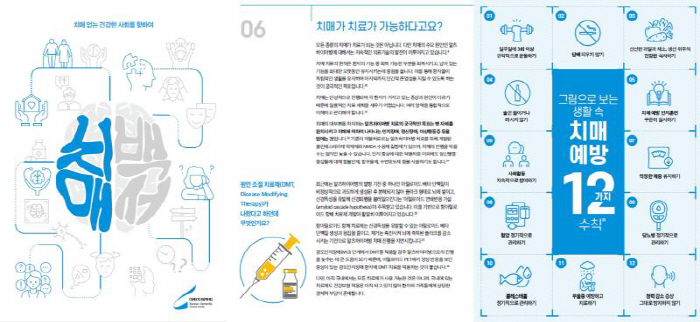
In addition, this dementia white paper introduced '12 Rules for Dementia Prevention' including nutrition, exercise, sleep and cognitive training to prevent dementia. It also includes information on government policy support and major benefits that patients with mild cognitive impairment and dementia and their families should know, such as the main support system of the Ministry of Health and Welfare and the Dementia Relief Center, long-term care services for the elderly, special cases for calculating severe dementia, and advance directives for dementia families.
Jeong Ji-hyang, Public Relations Director of the Korean Dementia Association (Department of Neurology at Seoul Medical Center), said, `As Korea has entered a super-aged society this year, the Korean Dementia Association is fulfilling its mission by carrying out various activities throughout the year, including suggestions from experts on the urgent need to manage dementia early and introduce treatment and campaign for disease to the nation"We will do our best to ensure that high-risk dementia patients such as mild cognitive impairment, dementia patients, and their families are fully aware of the benefits and prevention methods of treatment from the latest medical advances and fully recognize and enjoy Korea's well-equipped policy support."."
The Korean Dementia Association has released the materials on the association's website so that more medical staff and hospitals can use the "2025 Dementia White Paper", and plans to print and produce a booklet and distribute it at various public campaigns and events.
In addition to accurate information on the disease, this dementia white paper covers information that the public is curious about, such as the latest diagnosis and treatment, the current prevalence of dementia in Korea, and the core government support system. In particular, by explaining the latest diagnosis and treatment methods in early dementia management, such as mild cognitive impairment, it emphasized the hope for dementia prevention and management possibilities that have changed from before.
Chairman Choi Sung-hye (Neurology at Inha University Hospital) said in the introduction of the Dementia White Paper that `Recent remarkable advances in medical technology have greatly expanded the possibility of early diagnosis and treatment of dementia"The Korean Dementia Association will not spare any support for disease education so that new diagnosis and treatment techniques can be safely and effectively established in Korea, and this white paper is organized to make it easier for the general public to understand."
Korea is entering the super-aged society this year and entering the era of 1 million people with dementia. Dementia is an irreversible progressive disease that is irreversible once developed, worsening from mild cognitive impairment to mild, moderate, and severe dementia, accompanied by disease pain, burden of care, and a surge in socioeconomic costs. According to the Central Dementia Center, the more severe the annual management cost per person increases, more than doubling the annual management cost of severe compared to Choi Kyung-do, and the total annual national dementia management cost for dementia patients is about 22 trillion won, which is about 1% of GDP
Known as the pre-dementia stage, 'mild cognitive impairment' is an intermediate stage between normal aging and dementia, and the annual dementia conversion rate for the general elderly is 1-2%, while 10-15% of patients with mild cognitive impairment transition to dementia annually. However, there is a lack of accurate information compared to general dementia disease information.
In response, the Korean Dementia Association richly contained about half of the dementia white paper, which consists of a total of eight table of contents, such as the explanation of mild cognitive impairment disease called the pre-dementia stage and the latest differential tests and treatments in the early dementia stage. In particular, it was emphasized that in the case of Alzheimer's dementia, applying accurate diagnosis and cause control treatment using biomarkers in the early stages can slow the deterioration of severe dementia.
In addition, this dementia white paper introduced '12 Rules for Dementia Prevention' including nutrition, exercise, sleep and cognitive training to prevent dementia. It also includes information on government policy support and major benefits that patients with mild cognitive impairment and dementia and their families should know, such as the main support system of the Ministry of Health and Welfare and the Dementia Relief Center, long-term care services for the elderly, special cases for calculating severe dementia, and advance directives for dementia families.
Jeong Ji-hyang, Public Relations Director of the Korean Dementia Association (Department of Neurology at Seoul Medical Center), said, `As Korea has entered a super-aged society this year, the Korean Dementia Association is fulfilling its mission by carrying out various activities throughout the year, including suggestions from experts on the urgent need to manage dementia early and introduce treatment and campaign for disease to the nation"We will do our best to ensure that high-risk dementia patients such as mild cognitive impairment, dementia patients, and their families are fully aware of the benefits and prevention methods of treatment from the latest medical advances and fully recognize and enjoy Korea's well-equipped policy support."."
The Korean Dementia Association has released the materials on the association's website so that more medical staff and hospitals can use the "2025 Dementia White Paper", and plans to print and produce a booklet and distribute it at various public campaigns and events.
|
This article was translated by Naver AI translator.