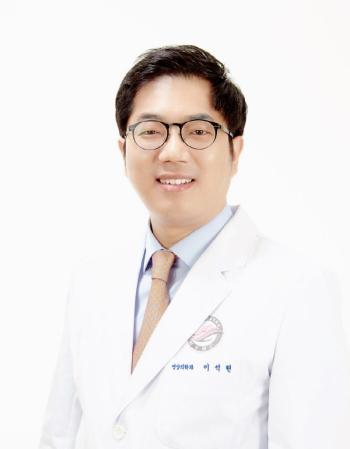
Kim Tae-kyun, director of Busan Himchan Hospital, shares know-how in artificial joint surgery for Mako Summiter robots
Dec 01, 2025


On the 29th, an academic event was held in Gangnam, Seoul, in the field of robot artificial joint surgery hosted by the global medical device company 'Stryker'2025 Mako Summit'.
'Mako Summit' is a representative international event where orthopedic specialists and researchers participate in large numbers every year to share clinical data of robotic artificial joint surgery with the aim of standardizing techniques and sharing experiences.
At the event, a large number of orthopedic surgeons and researchers working at leading medical institutions in Korea, including Kim Tae-kyun, director of Busan Himchan Hospital, participated in the event to share clinical data on robotic joint surgery.
Hospital director Kim took the podium on the same day and shared the accumulated experience of 3,800 robot artificial joint surgery and accumulated clinical know-how since the introduction of Mako robots in 2020.
In the lecture, hospital director Kim presented a patient-specific robot artificial joint surgery strategy, accuracy-based surgical plan, and clinical cases using robots in degenerative arthritis patients. The characteristics of the Mako system, which reduces errors through preoperative CT-based 3D analysis and robotic arm assistance, were described along with real-world cases.
In particular, chronic pain patients who do not improve with conservative treatments such as degenerative arthritis, post-traumatic arthritis, knee deformation, drug, injection, and physical therapy were cited as patients requiring robotic artificial joint surgery.
The core strength of robotic surgery is that it can increase accuracy and reduce unnecessary bleeding. Since precise planning is performed from the preoperative stage, the cutting range is clearly calculated, and the artificial joint can be inserted in the most suitable position for the bone shape accordingly.
In particular, in the robotic surgery process, 'haptic' technology operates so that it does not deviate from the preset cutting range, immediately limiting unintended movements or mistakes. Thanks to these safety devices, damage to normal tissues is minimized and the amount of bleeding is greatly reduced.
As a result, not only errors during surgery are reduced, but also the possibility of complications or side effects related to bleeding is reduced, so more stable surgical results can be expected.
A partial replacement that preserves healthy tissue as much as possible, can replace only damaged areas, and anterior replacement is applied to patients with degenerative arthritis, and the robotic system can help with accurate cutting and alignment to increase recovery speed and surgical satisfaction.
Busan Himchan Hospital has steadily accumulated research results and clinical data in the field of robot artificial joints, strengthening its competitiveness in the domestic robot treatment field.
Hospital Director Kim said, `Orthopaedic surgery is changing to a more precise and patient-specific paradigm"As we are leading robot artificial joint surgery in the region by introducing Mako robotic surgery machine in 2020, we will continue to research and clinical application and strive to provide more advanced medical technology to patients."
Meanwhile, hospital director Kim has been invited to three global academic events this year alone, including the above event, the Mako Total Knee Certification Course, and the Knee Champions Meeting.
'Mako Summit' is a representative international event where orthopedic specialists and researchers participate in large numbers every year to share clinical data of robotic artificial joint surgery with the aim of standardizing techniques and sharing experiences.
At the event, a large number of orthopedic surgeons and researchers working at leading medical institutions in Korea, including Kim Tae-kyun, director of Busan Himchan Hospital, participated in the event to share clinical data on robotic joint surgery.
Hospital director Kim took the podium on the same day and shared the accumulated experience of 3,800 robot artificial joint surgery and accumulated clinical know-how since the introduction of Mako robots in 2020.
In the lecture, hospital director Kim presented a patient-specific robot artificial joint surgery strategy, accuracy-based surgical plan, and clinical cases using robots in degenerative arthritis patients. The characteristics of the Mako system, which reduces errors through preoperative CT-based 3D analysis and robotic arm assistance, were described along with real-world cases.
In particular, chronic pain patients who do not improve with conservative treatments such as degenerative arthritis, post-traumatic arthritis, knee deformation, drug, injection, and physical therapy were cited as patients requiring robotic artificial joint surgery.
The core strength of robotic surgery is that it can increase accuracy and reduce unnecessary bleeding. Since precise planning is performed from the preoperative stage, the cutting range is clearly calculated, and the artificial joint can be inserted in the most suitable position for the bone shape accordingly.
In particular, in the robotic surgery process, 'haptic' technology operates so that it does not deviate from the preset cutting range, immediately limiting unintended movements or mistakes. Thanks to these safety devices, damage to normal tissues is minimized and the amount of bleeding is greatly reduced.
As a result, not only errors during surgery are reduced, but also the possibility of complications or side effects related to bleeding is reduced, so more stable surgical results can be expected.
A partial replacement that preserves healthy tissue as much as possible, can replace only damaged areas, and anterior replacement is applied to patients with degenerative arthritis, and the robotic system can help with accurate cutting and alignment to increase recovery speed and surgical satisfaction.
Busan Himchan Hospital has steadily accumulated research results and clinical data in the field of robot artificial joints, strengthening its competitiveness in the domestic robot treatment field.
Hospital Director Kim said, `Orthopaedic surgery is changing to a more precise and patient-specific paradigm"As we are leading robot artificial joint surgery in the region by introducing Mako robotic surgery machine in 2020, we will continue to research and clinical application and strive to provide more advanced medical technology to patients."
Meanwhile, hospital director Kim has been invited to three global academic events this year alone, including the above event, the Mako Total Knee Certification Course, and the Knee Champions Meeting.
|

This article was translated by Naver AI translator.