Normal exposure to fine dust also increases the risk of prostate cancer
Dec 01, 2025


|
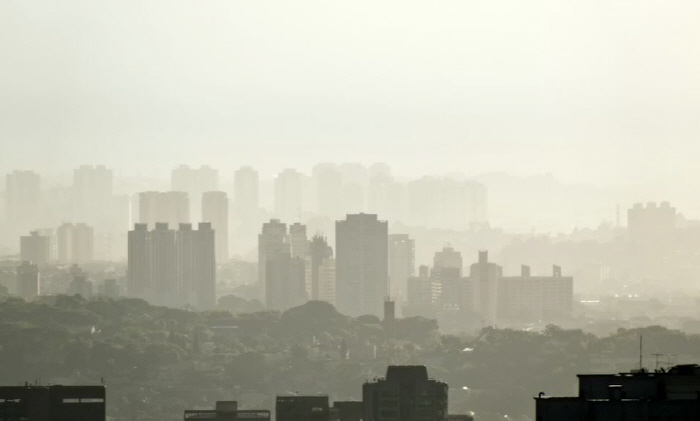
A research team led by Park Yong-hyun (co-corresponding author) of the Department of Urology at Seoul St. Mary's Hospital of Catholic University, Park Ji-hwan (co-corresponding author) of coding at Dankook University's Free Liberal Arts College, and Professor Noh Mi-jung (first author) of Dankook University's School of Health Sciences analyzed the National Health Insurance Corporation database and announced a study that even moderate exposure to fine dust (PM10) can increase the risk of prostate cancer. In particular, the risk of developing ultra-fine dust was high if it was continuously exposed to fine dust even at a low level.
The research team analyzed 20,430 people in the National Health Insurance Corporation database from 2010 to 2020. The exposure to fine dust was checked for 3 years from 2010, and the tracking period was calculated for 6 years from 2015. Prostate cancer patients (4071 patients, 19.9%) and non-prostate cancer patients (16,359 patients, 80.1%) were compared.
We evaluated the risk of developing prostate cancer using fine dust data provided by Air Korea's annual average air quality database. Korea's fine dust forecasting grade is classified into four levels: good (0-30㎍/㎥), normal (31-80㎍/㎥), bad (80-150㎍/㎥), and very bad (151㎍/㎥ or more).
As a result of the analysis, even moderate exposure to fine dust was found to be a risk factor for prostate cancer. In other words, statistics confirmed that the group exposed to a lot of fine dust had a higher risk of developing prostate cancer than the group exposed to less fine dust based on the average fine dust concentration of 47㎍/㎥ in the study data.
In particular, even if the concentration of ultrafine dust (PM2.5) is low, which is ultrafine dust smaller than 2.5 millimeters, it has been confirmed that moderate exposure to fine dust (PM10) also affects prostate cancer. In other words, even if ultrafine dust, which is known to be easily inhaled into the body due to its small size and is harmful to health, is low below 25㎍/㎥, 'intermediate fine dust exposure' is once again confirmed as a risk factor for prostate cancer.
Professor Noh Mi-jung of Dankook University explained the meaning of the study, "We generally do not wear masks at a medium level of fine dust. Even if fine dust is at a moderate level, which is Korea's fine dust forecasting level, the fact that it can increase the risk of developing prostate cancer is no longer an option but an essential task for air purification, such as wearing a mask and regularly ventilating the air inside."
Professor Park Ji-hwan of Dankook University said "Korea's fine dust standards are 50㎍/㎥ per year and 100㎍/㎥ per day on average, which is less strict than the WHO standards of 15㎍/㎥ and 45㎍/㎥ per day on average, requiring stricter environmental standards."When we need active policies to reduce public health and long-term social costs and attention from all the people on mask wearing and air quality management..." he stressed.
Prostate cancer, which ranks fourth in the incidence of cancer among men in Korea, has a high risk of developing it for men over the age of 50. Initially, it is often asymptomatic, but when it progresses, the urine stem weakens, and urination-related symptoms such as frequent urination, frequent night urination, and hematuria, which is mixed with blood in urine or semen, may appear. The 5-year survival rate for initial treatment is 99%, but it is difficult to treat if it spreads to surrounding bones and lymph glands, so the Korean Urology Association recommends annual prostate cancer tests for men over 50 years old without symptoms and men aged 40 to 45 years old if they have a family history.
They are genetic factors of prostate cancer, obesity, smoking, male hormone abnormalities and westernized eating habits, and the study found that fine dust also increases the risk of prostate cancer. However, the research team also suggests the possibility of lowering this risk through lifestyle. As a result of the research team's sub-group survey, the number of walks per week, smoking, drinking, high blood pressure, and obesity were correlated with the risk of development. In particular, the group who did not walk once a week had a 1.2 times higher risk of development and the obese group had a 1.8 times higher risk of development.
Professor Park Yong-hyun of Seoul St. Mary's Hospital advised "As lifestyle management can help alleviate the incidence of cancer related to air pollution, having a healthy lifestyle such as proper weight and exercise is important for preventing prostate cancer."
The findings were recently published in the international public health journal Frontiers in Public Health.
|

This article was translated by Naver AI translator.