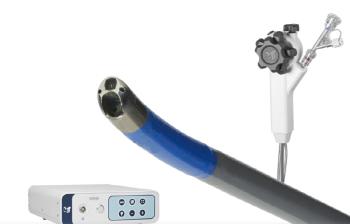
Soonchunhyang University Bucheon Hospital introduces the latest IMAX biliary tract endoscopy for the first time at a domestic university hospital
Dec 01, 2025


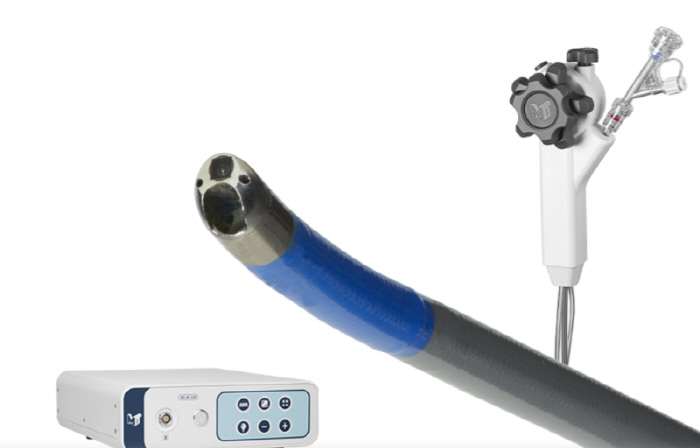
Soon Chun Hyang University Bucheon Hospital (Hospital Director Moon Jong-ho) announced on the 1st that it has introduced the first high-resolution disposable digital biliary tract endoscope 'eMax digital biliary tract system' for the first time in Korea.
The biliary tract is well known as a region that is difficult to diagnose and treat because it is located deep in the body and its structure is complex. For this reason, in order to compensate for the accuracy of endoscopic retrograde cholangiopancreatography (ERCP) performed by imaging X-rays, the need for a biliary endoscope that can directly observe lesions in high definition has been steadily raised.
The IMAX digital biliary endoscopy system is an innovative technology called 'eyesed pancreatic biliary catheter' that can accurately determine the location of cancer by directly observing the biliary tract. Like a gastroscopy, an endoscope can be inserted deep into the biliary tract to diagnose and treat various diseases while directly checking the lesion. Not only can it effectively identify the characteristics of biliary tract tumors such as biliary tract cancer and perform biopsy at the same time to increase the accuracy of diagnosis, but it is also very useful for treating biliary tract stones that were previously difficult to treat, such as refractory biliary tract stones.
The IMAX digital biliary endoscopy system introduced by Soonchunhyang University Bucheon Hospital provides clearer digital image quality and is released in various diameters, enabling precise examination and treatment tailored to the anatomical structure of individual patients.
Moon Jong-ho, director of the Center for Gastroenterology at Soonchunhyang University Bucheon Hospital, said "We expect that the introduction of the IMAX digital biliary endoscopy system will enable faster and more accurate diagnosis and treatment for patients with intractable biliary tract disease."
The biliary tract is well known as a region that is difficult to diagnose and treat because it is located deep in the body and its structure is complex. For this reason, in order to compensate for the accuracy of endoscopic retrograde cholangiopancreatography (ERCP) performed by imaging X-rays, the need for a biliary endoscope that can directly observe lesions in high definition has been steadily raised.
The IMAX digital biliary endoscopy system is an innovative technology called 'eyesed pancreatic biliary catheter' that can accurately determine the location of cancer by directly observing the biliary tract. Like a gastroscopy, an endoscope can be inserted deep into the biliary tract to diagnose and treat various diseases while directly checking the lesion. Not only can it effectively identify the characteristics of biliary tract tumors such as biliary tract cancer and perform biopsy at the same time to increase the accuracy of diagnosis, but it is also very useful for treating biliary tract stones that were previously difficult to treat, such as refractory biliary tract stones.
The IMAX digital biliary endoscopy system introduced by Soonchunhyang University Bucheon Hospital provides clearer digital image quality and is released in various diameters, enabling precise examination and treatment tailored to the anatomical structure of individual patients.
Moon Jong-ho, director of the Center for Gastroenterology at Soonchunhyang University Bucheon Hospital, said "We expect that the introduction of the IMAX digital biliary endoscopy system will enable faster and more accurate diagnosis and treatment for patients with intractable biliary tract disease."
|
This article was translated by Naver AI translator.