Seoul National University Hospital Commemorative Symposium on the 140th Anniversary of Jejungwon...South Korea's healthcare system changes illuminated


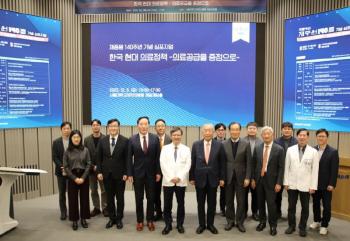
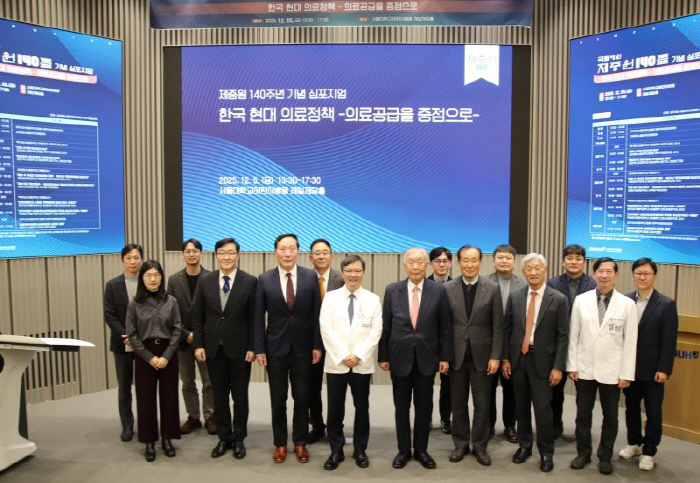
Seoul National University Hospital Medical History Cultural Center (Director Kim Joo-sung) held a symposium commemorating the 140th anniversary of Jejungwon at Cheil Jedang Hall on the 5th and highlighted the process of forming and developing the Korean medical system, focusing on major institutional changes. Various announcements such as regional imbalances in medical resources, establishment of a management system for medical personnel, establishment of a local medical model, establishment of a major's system, and efforts to resolve Muuichon have been made to take a broad look at the flow of Korean medical care.
At the symposium, Kim Sang-tae, a professor at Seoul National University Hospital's Medical History and Culture Center, carefully analyzed the number of graduates from six medical institutions, the number of doctors and doctors who passed the Japanese medical exam, the distribution and competition of government-public hospitals and missionary hospitals, and medical activities of opening doctors (private hospitals) and public doctors, and explained and started discussions on the aspects and characteristics of medical supply.
Kim Jin-hyuk, a full-time researcher at Korea University's Women's Medical History Institute, then presented the problem of regional concentration of medical resources in the U.S. military and explained the deepening imbalance caused by the absolute lack of doctors, the concentration of medical institutions centered on Gyeongseong, and the return of Japanese doctors immediately after liberation. Researcher Kim emphasized that these structural limitations became an important background for future discussions on Korean medical policy.
Professor Park Ji-young of Jeonbuk Medical University's humanities and social medicine class introduced the process of reorganizing the management system of medical personnel after liberation and the enactment of the National Medical Law in 1951. Professor Park emphasized that the National Medical Law was an institutional achievement created in the process of coordinating conflicting views between the government's intention to expand medical personnel and the medical community's demand to strengthen professional and qualitative management.
Dr. Kang Jae-gu of Kyung Hee University's history department continued his presentation under the theme of the 「Best Health Program Creation Project」 promoted by the WHO in Chungcheongnam-do in the 1960s. Dr. Kang explained that the local medical system linking public health centers, health centers, and provincial hospitals was established based on prevention-oriented health projects and medical manpower training, and this model later spread across the country.
Joo Won-young, a lecturer in the Department of Humanities and Social Medicine at Catholic Medical University, presented the theme of the introduction and change of the major system. Won said that the specialist system, which started in a mixed form in the 1950s, laid the institutional foundation through the introduction of qualification tests in the 1960s and strikes of training in 1971, and that the system was reorganized to expand the number of specialized subjects from 10 in 1952 to 26 in 1996, and the specialization of Korean medical care began in earnest.
Park Seung-man, a professor of humanities and social medicine at Catholic Medical University, presented the plan to resolve Muuichon Village promoted by the Social Security Review Committee of the Ministry of Health and Social Affairs in the 1960s and 1980s. Professor Park said that the expansion of public health centers and health branches and strengthening the functions of provincial hospitals were promoted, but it did not reach full realization due to financial and policy environment restrictions.
Finally, Moon Jin-soo, vice president of Seoul National University Hospital, explained the public medical activities and roles of Seoul National University Hospital to improve access to medical care, provide essential medical care, and ease gaps between regions, and emphasized the need to strengthen the public medical system in a new environment such as changes in medical technology and demographic.
Director Kim Joo-sung said, "We were able to historically confirm how the medical supply system has developed by reflecting on the flow of medical care in Korea in 140 years from Jejungwon"We hope that this discussion will serve as a meaningful basis for seeking future medical policy directions" he said.
At the symposium, Kim Sang-tae, a professor at Seoul National University Hospital's Medical History and Culture Center, carefully analyzed the number of graduates from six medical institutions, the number of doctors and doctors who passed the Japanese medical exam, the distribution and competition of government-public hospitals and missionary hospitals, and medical activities of opening doctors (private hospitals) and public doctors, and explained and started discussions on the aspects and characteristics of medical supply.
Kim Jin-hyuk, a full-time researcher at Korea University's Women's Medical History Institute, then presented the problem of regional concentration of medical resources in the U.S. military and explained the deepening imbalance caused by the absolute lack of doctors, the concentration of medical institutions centered on Gyeongseong, and the return of Japanese doctors immediately after liberation. Researcher Kim emphasized that these structural limitations became an important background for future discussions on Korean medical policy.
Professor Park Ji-young of Jeonbuk Medical University's humanities and social medicine class introduced the process of reorganizing the management system of medical personnel after liberation and the enactment of the National Medical Law in 1951. Professor Park emphasized that the National Medical Law was an institutional achievement created in the process of coordinating conflicting views between the government's intention to expand medical personnel and the medical community's demand to strengthen professional and qualitative management.
Dr. Kang Jae-gu of Kyung Hee University's history department continued his presentation under the theme of the 「Best Health Program Creation Project」 promoted by the WHO in Chungcheongnam-do in the 1960s. Dr. Kang explained that the local medical system linking public health centers, health centers, and provincial hospitals was established based on prevention-oriented health projects and medical manpower training, and this model later spread across the country.
Joo Won-young, a lecturer in the Department of Humanities and Social Medicine at Catholic Medical University, presented the theme of the introduction and change of the major system. Won said that the specialist system, which started in a mixed form in the 1950s, laid the institutional foundation through the introduction of qualification tests in the 1960s and strikes of training in 1971, and that the system was reorganized to expand the number of specialized subjects from 10 in 1952 to 26 in 1996, and the specialization of Korean medical care began in earnest.
Park Seung-man, a professor of humanities and social medicine at Catholic Medical University, presented the plan to resolve Muuichon Village promoted by the Social Security Review Committee of the Ministry of Health and Social Affairs in the 1960s and 1980s. Professor Park said that the expansion of public health centers and health branches and strengthening the functions of provincial hospitals were promoted, but it did not reach full realization due to financial and policy environment restrictions.
Finally, Moon Jin-soo, vice president of Seoul National University Hospital, explained the public medical activities and roles of Seoul National University Hospital to improve access to medical care, provide essential medical care, and ease gaps between regions, and emphasized the need to strengthen the public medical system in a new environment such as changes in medical technology and demographic.
Director Kim Joo-sung said, "We were able to historically confirm how the medical supply system has developed by reflecting on the flow of medical care in Korea in 140 years from Jejungwon"We hope that this discussion will serve as a meaningful basis for seeking future medical policy directions" he said.
|
This article was translated by Naver AI translator.