Patients with autoimmune encephalitis in a 21-month coma, miraculous recovery...New hope for treatment of rare and intractable diseases
Dec 04, 2025


Gyeongsang National University Hospital (Hospital Director Ahn Sung-ki) announced that a team of neurological Youngsoo Kim professors succeeded in recovering patients who relied on ventilators for 21 months in a coma due to severe 'NMDAR encephalitis' through continuous immunotherapy and multidisciplinary intensive therapy to the extent that they can perform basic daily life.
'NMDAR encephalitis' is a representative disease of autoimmune encephalitis caused by autoantibodies to NMDA receptors in the neuronal membrane. Abnormal behavior, memory disorders, and psychosis appear in the early stages, followed by seizures, motor abnormalities, and autonomic nervous system instability, and in severe cases, it worsens to coma and respiratory dependence. If immunotherapy is properly performed, the recovery rate is more than 70 to 80%, but if intensive care unit treatment is prolonged or immunotherapy resistance, the mortality rate from infection and sepsis increases.
In particular, NMDAR encephalitis patients who have been in a coma for more than 20 months are extremely rare to recover, so this clinical outcome is of great significance both domestically and internationally.
The patient was a woman in her 30s, who initially showed symptoms such as rambling speech disorders, inappropriate behavior, memory loss, and insomnia, and was mistaken for a psychiatric disease and treated. Since then, the decline in consciousness has progressed rapidly, and at the time of admission, the inability to perform orders, abnormal behavior, and persistent abnormal movements of limbs and faces have been accompanied by seizures, showing a typical NMDAR encephalitis pattern.
Anti-NMDAR antibody positive was confirmed by spinal fluid and serum tests, and the patient started immunotherapy on a ventilator after admission to the ICU on the 9th day of hospitalization due to repeated systemic attacks and severe autonomic nervous instability. Ovarian malformations, which are thought to be the cause of the disease, were performed, and various first and second immunotherapy, which is the standard treatment for NMDAR encephalitis, was performed in stages, but difficult treatment continued due to the lack of recovery of consciousness and repetition of epilepsy.
Professor Youngsoo Kim's team continued to conduct immunotherapy while closely consulting with their families even in a long-term coma, which is less likely to recover, and through cooperation with the intensive care unit nursing team and the infectious medicine department, they overcame several sepsis crises.
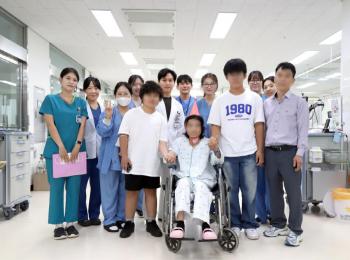
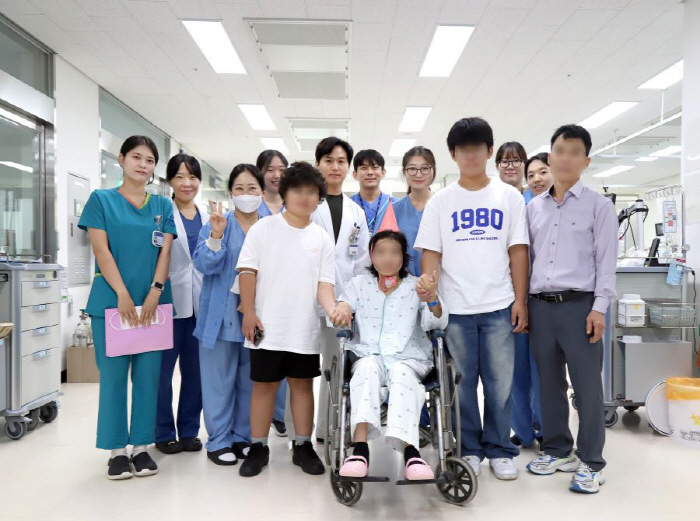
After 21 months of hospitalization, the patient made eye contact with the medical staff for the first time and appeared to imitate the behavior of the nurse. After that, simple communication became possible, and dependence on ventilators gradually decreased. With the help of the rehabilitation team at 22 months of hospitalization, he was able to eat on his own and walk on his own, so he completed 24 months of intensive care treatment and moved to a general hospital room. At 25 months of hospitalization, patients were able to walk independently, and most of them recovered to a level where they could perform their daily lives on their own and were discharged from the hospital.
In this treatment process, several departments, including neurology Youngsoo Kim professor, Kim Min-jung, nurse Ryu Gongju, internal medicine intensive care unit nursing team, electroencephalogram laboratory, and rehabilitation medicine professor Byun Ha-young and rehabilitation treatment team, worked together for a long time to restore the life and function of patients.
Professor Youngsoo Kim emphasized that "the key to NMDAR encephalitis is rapid and aggressive immunotherapy, and in the course of treatment, serious complications such as sepsis often occur and loss of life.". We would like to express our deep gratitude for the love and sacrifice of the family who have been protecting the patient for a long time, and also express our respect and gratitude for the dedication of the family members of Gyeongsang National University Hospital who participated in the treatment together," he said.
'NMDAR encephalitis' is a representative disease of autoimmune encephalitis caused by autoantibodies to NMDA receptors in the neuronal membrane. Abnormal behavior, memory disorders, and psychosis appear in the early stages, followed by seizures, motor abnormalities, and autonomic nervous system instability, and in severe cases, it worsens to coma and respiratory dependence. If immunotherapy is properly performed, the recovery rate is more than 70 to 80%, but if intensive care unit treatment is prolonged or immunotherapy resistance, the mortality rate from infection and sepsis increases.
In particular, NMDAR encephalitis patients who have been in a coma for more than 20 months are extremely rare to recover, so this clinical outcome is of great significance both domestically and internationally.
The patient was a woman in her 30s, who initially showed symptoms such as rambling speech disorders, inappropriate behavior, memory loss, and insomnia, and was mistaken for a psychiatric disease and treated. Since then, the decline in consciousness has progressed rapidly, and at the time of admission, the inability to perform orders, abnormal behavior, and persistent abnormal movements of limbs and faces have been accompanied by seizures, showing a typical NMDAR encephalitis pattern.
Anti-NMDAR antibody positive was confirmed by spinal fluid and serum tests, and the patient started immunotherapy on a ventilator after admission to the ICU on the 9th day of hospitalization due to repeated systemic attacks and severe autonomic nervous instability. Ovarian malformations, which are thought to be the cause of the disease, were performed, and various first and second immunotherapy, which is the standard treatment for NMDAR encephalitis, was performed in stages, but difficult treatment continued due to the lack of recovery of consciousness and repetition of epilepsy.
Professor Youngsoo Kim's team continued to conduct immunotherapy while closely consulting with their families even in a long-term coma, which is less likely to recover, and through cooperation with the intensive care unit nursing team and the infectious medicine department, they overcame several sepsis crises.
After 21 months of hospitalization, the patient made eye contact with the medical staff for the first time and appeared to imitate the behavior of the nurse. After that, simple communication became possible, and dependence on ventilators gradually decreased. With the help of the rehabilitation team at 22 months of hospitalization, he was able to eat on his own and walk on his own, so he completed 24 months of intensive care treatment and moved to a general hospital room. At 25 months of hospitalization, patients were able to walk independently, and most of them recovered to a level where they could perform their daily lives on their own and were discharged from the hospital.
In this treatment process, several departments, including neurology Youngsoo Kim professor, Kim Min-jung, nurse Ryu Gongju, internal medicine intensive care unit nursing team, electroencephalogram laboratory, and rehabilitation medicine professor Byun Ha-young and rehabilitation treatment team, worked together for a long time to restore the life and function of patients.
Professor Youngsoo Kim emphasized that "the key to NMDAR encephalitis is rapid and aggressive immunotherapy, and in the course of treatment, serious complications such as sepsis often occur and loss of life.". We would like to express our deep gratitude for the love and sacrifice of the family who have been protecting the patient for a long time, and also express our respect and gratitude for the dedication of the family members of Gyeongsang National University Hospital who participated in the treatment together," he said.
|
This article was translated by Naver AI translator.