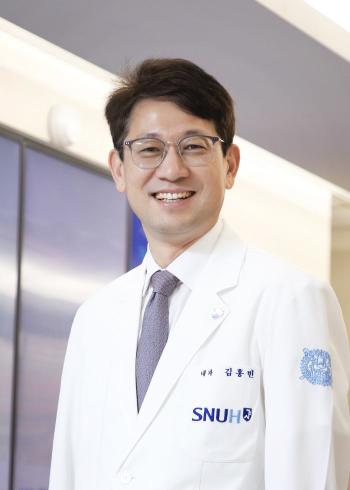
Professor Kim Hong-bin of Bundang Seoul National University Hospital took office as chairman of the Korean Infectious Society...Best to create a safe society
Dec 03, 2025


Professor Kim Hong-bin of the Department of Infectious Diseases at Bundang Seoul National University Hospital was inaugurated as the 33rd chairman of the Korean Infectious Society. The term of office is two years from December 2025, and Choi Hee-jung, a professor of infectious diseases at Ewha Womans University Mok-dong Hospital, was the new chairman.
The Korean Infectious Society, founded in 1961, is Korea's leading infectious diseases academic organization and has led the prevention, treatment, and research of infectious diseases. It plays a pivotal role in various areas, such as responding to new infectious diseases and managing proper use of antibiotics, and is leading the development of infectious diseases by holding academic conferences and publishing Infection & Chemistry.
Professor Kim Hong-bin was awarded the 2016 Green Tide Order of Merit for his contribution to preventing the spread at the forefront of infection control by participating in the public-private joint TF, the immediate response team, and the World Health Organization's joint evaluation team during the MERS outbreak.
In addition, as chairman of the Korea Centers for Disease Control and Prevention's Antibiotic Stewardship Committee and a member of the American Medical Epidemiology Society's Antibiotic Stewardship Committee, he took the chairmanship of the board in recognition of his contribution to infectious diseases by working hard to establish countermeasures against antibiotic resistance called the "quiet pandemic".
Professor Kim Hong-bin said, `We will do our best to create a society that is safe from infection in an era when new infectious diseases and antibiotic-resistant bacteria constantly threaten humanity.' We will focus on fostering infectious experts and creating an environment to exercise professionalism, revitalizing multidisciplinary academic research, expanding exchanges with related organizations at home and abroad, and preparing career development programs for future generations" he said.
Meanwhile, Professor Kim Hong-bin is a world-class authority in the field of medical infection and served as a member of the external cooperation committee of the American Medical Epidemiology Association (SHEA). Currently, he is active on the global stage as a member of the ▲ American Society of Infectious Diseases (2016~) ▲ Editorial member of the Official Journal of the American Medical Epidemiology (2021~) ▲ Member of the American Medical Epidemiology Society (2023~) ▲ Member of the World Health Organization's Advisory Committee on Antibiotic Resistance Strategic Technology (2024~).
The Korean Infectious Society, founded in 1961, is Korea's leading infectious diseases academic organization and has led the prevention, treatment, and research of infectious diseases. It plays a pivotal role in various areas, such as responding to new infectious diseases and managing proper use of antibiotics, and is leading the development of infectious diseases by holding academic conferences and publishing Infection & Chemistry.
Professor Kim Hong-bin was awarded the 2016 Green Tide Order of Merit for his contribution to preventing the spread at the forefront of infection control by participating in the public-private joint TF, the immediate response team, and the World Health Organization's joint evaluation team during the MERS outbreak.
In addition, as chairman of the Korea Centers for Disease Control and Prevention's Antibiotic Stewardship Committee and a member of the American Medical Epidemiology Society's Antibiotic Stewardship Committee, he took the chairmanship of the board in recognition of his contribution to infectious diseases by working hard to establish countermeasures against antibiotic resistance called the "quiet pandemic".
Professor Kim Hong-bin said, `We will do our best to create a society that is safe from infection in an era when new infectious diseases and antibiotic-resistant bacteria constantly threaten humanity.' We will focus on fostering infectious experts and creating an environment to exercise professionalism, revitalizing multidisciplinary academic research, expanding exchanges with related organizations at home and abroad, and preparing career development programs for future generations" he said.
Meanwhile, Professor Kim Hong-bin is a world-class authority in the field of medical infection and served as a member of the external cooperation committee of the American Medical Epidemiology Association (SHEA). Currently, he is active on the global stage as a member of the ▲ American Society of Infectious Diseases (2016~) ▲ Editorial member of the Official Journal of the American Medical Epidemiology (2021~) ▲ Member of the American Medical Epidemiology Society (2023~) ▲ Member of the World Health Organization's Advisory Committee on Antibiotic Resistance Strategic Technology (2024~).
|

This article was translated by Naver AI translator.